
THE ASBU FACULTY OF LAW IN TEN QUESTIONS
The questions most frequently asked about our Faculty by prospective and current students are answered below under ten headings. For questions not covered here, please use the links at the end of the page.
1. Where is the Faculty, and what are the options for transport and accommodation?
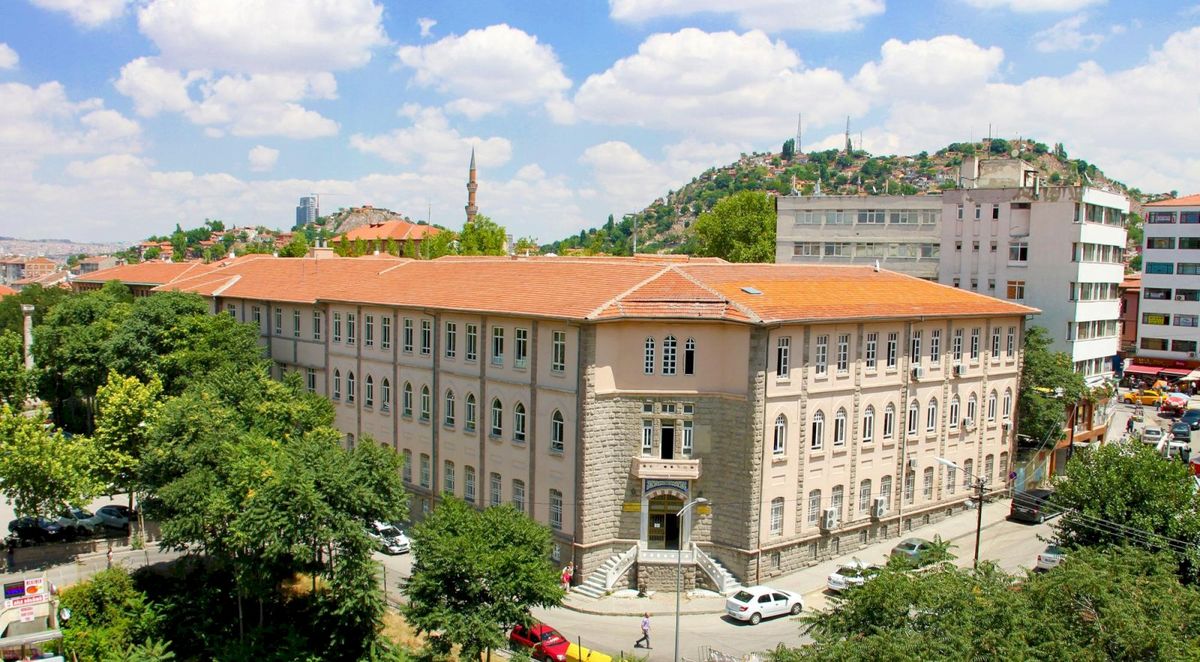
The Faculty is located on the ASBU campus in Ulus, in the centre of Ankara. The campus stands on the historic Government Square, surrounded by Ankara Castle, the Hacı Bayram-ı Veli Mosque, the buildings of the First and Second Grand National Assembly and the Victory Monument. Ulus metro station is within walking distance, and the Faculty can be reached by a single means of transport from almost anywhere in Ankara. Directions from the intercity bus terminal (AŞTİ), Esenboğa Airport and Ankara Railway Station are given on the Transportation page.
Students can stay in public and private dormitories, above all those of the Credit and Dormitories Agency (KYK); many dormitories are within walking distance of the Faculty. Accommodation options are listed in the Accommodation section of the ASBU prospective students page (in Turkish).
2. What ranking do I need for admission, and is it possible to transfer to the Faculty?
The Faculty's base scores and rankings for previous years are published in YÖK Atlas. Transfers to the Faculty are possible. The requirements and the calendar are announced by the Student Affairs Department before the start of each academic year; the announcements and the statistics for previous years are published on the Lateral Transfer page (in Turkish).
3. Can you tell me about the Northern Cyprus Campus?
In addition to its campus in Ankara, ASBU has a campus in Lefkoşa (Nicosia), the capital of the Turkish Republic of Northern Cyprus. Members of the ASBU Faculty of Law also teach at the Faculty of Law on the Northern Cyprus Campus, which has a separate code in the ÖSYM preference guide. Tuition is free on the Ankara Campus, while fees are charged on the Northern Cyprus Campus. Students who choose the Northern Cyprus Campus are offered scholarships of up to one hundred per cent, depending on their achievement and personal circumstances. Information on fees and scholarships is available on the website of the Northern Cyprus Campus, and other questions are answered on its frequently asked questions page (in Turkish).
4. Is there a preparatory year, and can I be exempted from it?
Before starting their law courses, students receive one year of English preparatory education. To complete the preparatory year, students must pass the Foreign Language Proficiency Examination held by the School of Foreign Languages. The examination is held at the beginning of each academic year and at the end of each semester. Students who pass the examination at the beginning of the year are exempted from the preparatory year and start in the first year; those who pass at the end of a semester start their faculty courses in the autumn or spring semester, depending on the date of the examination. The examination calendar and the international examinations accepted as equivalent are announced by the School of Foreign Languages.
5. What does 30% English instruction mean, and can I learn a second foreign language?
Thirty per cent of the instruction at the Faculty is in English, which means that 30% of the courses in the curriculum are taught in English. Besides the academic English courses, some law courses and some courses from other fields in the curriculum are taught in English. A second foreign language is compulsory: students choose one of Arabic, Chinese, French, German, Italian, Japanese, Persian, Russian and Spanish.
6. What are the curriculum and the elective courses, and is attendance compulsory?
The courses of the undergraduate programme, including the electives, are listed in the undergraduate curriculum (in Turkish); course contents and ECTS credits are given in the ECTS Information Package of the Student Information System.
Attendance at courses and practical sessions is compulsory. Under Article 16(1) of the ASBU Regulation on Associate and Undergraduate Education (in Turkish), a student who misses more than 30% of the theoretical hours or more than 20% of the practical hours of a course, including excused absences, may not sit any examination of that course and fails it on grounds of absence.
7. Can I pursue a double major or a minor?
Yes. While continuing their studies, law students may pursue a double major or a minor in other undergraduate programmes of the University. Students who complete a double major receive a second bachelor's diploma, and those who complete a minor receive a minor certificate. For the double major, a protocol with the Theology programme is in force, and the protocol process with the International Relations and the Political Science and Public Administration programmes is ongoing. For the minor, students may apply to the departments of the University that offer a minor programme, within the quotas these departments allocate to law students.
Applications for the double major may be made at the earliest at the beginning of the third and at the latest at the beginning of the fifth semester by students with a cumulative grade point average of at least 3.00 who rank within the top 20% of their class or meet the score requirement of the directive. Applications for the minor may be made at the earliest at the beginning of the third and at the latest at the beginning of the sixth semester by students with a cumulative grade point average of at least 2.50. Detailed requirements and current announcements are given on the Double Major and Minor Programmes page.
8. Can you tell me about your academic staff?
Our academic staff consists of scholars who have distinguished themselves in their fields, maintain close ties with legal practice, value interdisciplinary work and are sensitive to diversity. The staff includes 13 professors, 9 associate professors, 16 assistant professors and 2 lecturers, together with 25 research assistants. The CVs of our academic staff are available on the Academic Staff page.
9. What internship, career and exchange opportunities are available?
Students are supported in doing internships at the Council of State, the Court of Cassation, courts, public prosecutors' offices, bar associations, law firms, regulatory and supervisory authorities and civil society organisations. The protocols signed by the University with the Council of State, the Justice Academy of Türkiye, the Ankara Courthouse and the Ankara Chief Public Prosecutor's Office bring students into the settings where law is practised. Students meet experts in their fields on a regular basis and can use the services of the ASBU Career Center in planning their careers.
Through the Erasmus+, Farabi and Mevlâna exchange programmes, students can spend a semester of their studies at partner higher education institutions.
10. What other opportunities does the Faculty offer?
IT law is one of the Faculty's distinctive fields. Courses in this field are offered at undergraduate and graduate level, the Faculty publishes the Digital Law Review twice a year, and symposia in this field are held every year. The Faculty offers master's programmes in Intellectual Property Law, IT and Technology Law, Private Law and Public Law, and doctoral programmes in IT and Technology Law, Private Law, Public Law and Human Rights.
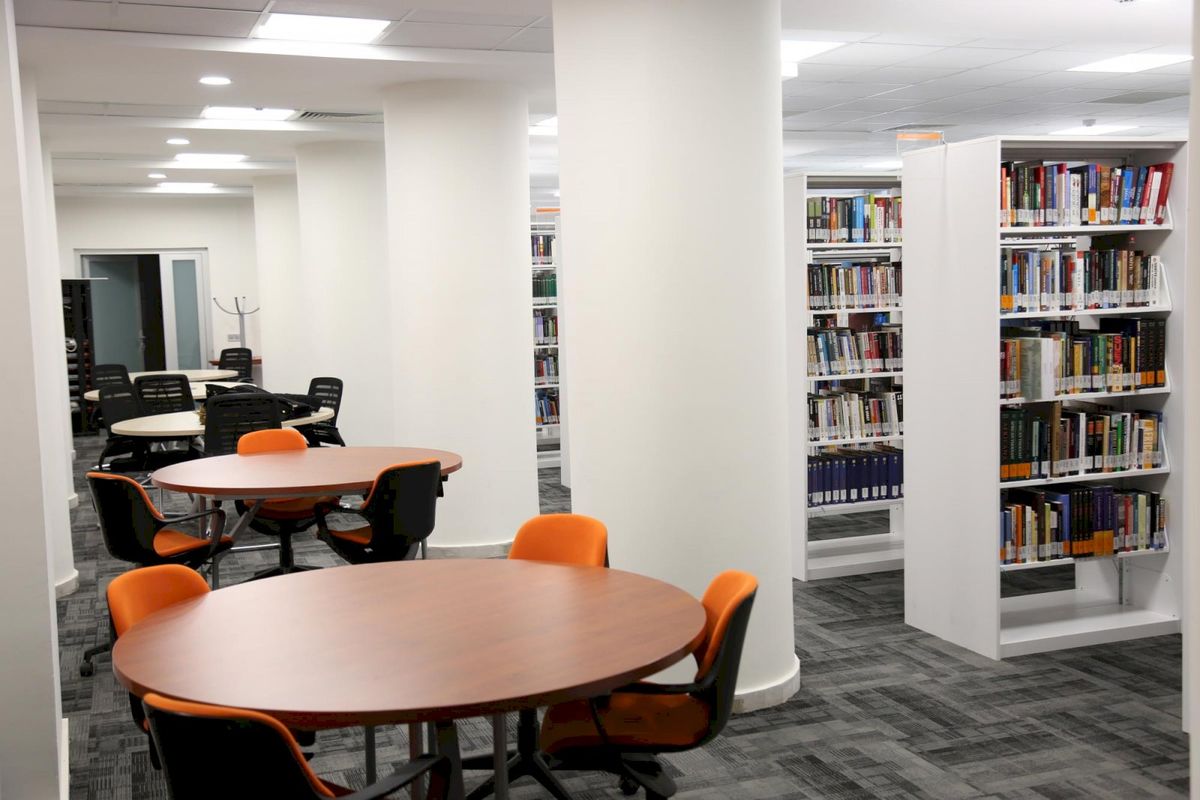
Student societies advised by members of the academic staff allow students to pursue their interests outside the classroom and to meet experts in their fields. The ASBU Library provides access to a large number of national and international e-books and databases, and the Sümerbank building, where the library is located, has study halls open 24 hours a day, 7 days a week.
For Other Questions